Unknown's avatar

About Nicki

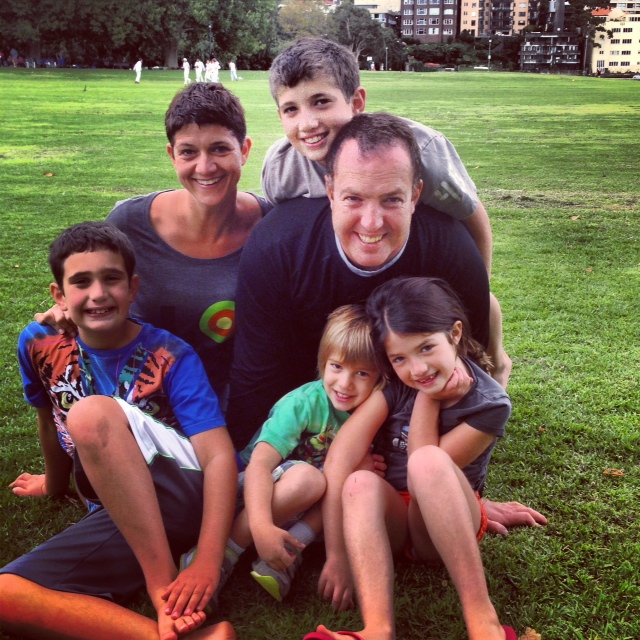
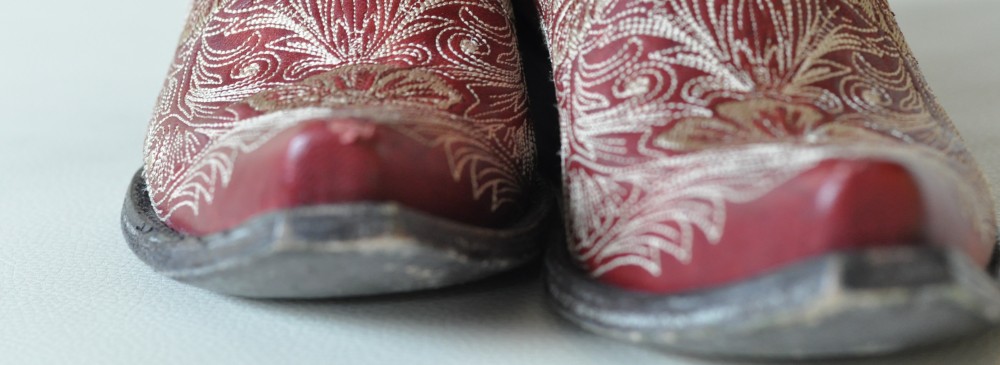
South African by chance and Californian by choice, I live in the California Bay Area with my husband, four kids and Pretzel, the aging dachshund. As a reluctant yet full-time, barely-at-home mom, writer, avid reader, country music lover and wannabe surf diva, I write it like I see it - with tears, humor, skepticism, and truth. Keeping it real, for me. And hopefully for you too. I wear my red cowboy boots whenever I can - they make me feel like I can do anything, and when I do it, I'll rock it (that may or may not happen, depending on the day and also if it's raining - cowboy boots do not do well in the rain). They have come to represent the part of me that does not love being a stay-at-home mom, the part that wants to wander, explore and discover, and that sometimes does get to do all of that - both in real life, and on the page.

It takes tea

Last week was a week from hell. It slammed me from the inside out, from the outside in, up, down and sideways. A bad week? That would’ve been doable. Anyone who saw me, spoke to me, texted me can attest to my emotional unraveling. Even if it was just in passing.

I didn’t want to write about it. I didn’t want to write about how sad I was. I didn’t want to think about the things I didn’t want to think about. About why I felt so sad. So unraveled. Or write about them.

But I can’t stop thinking about them.

Let’s just call it one of those weeks. Or one of those months. Or one of those years. We all have them. Things are good, and life feels wonderful and possible and then suddenly it doesn’t. Or maybe not suddenly. Maybe slowly and painfully. Maybe for no real reason, or maybe for the biggest reason of all.

Bad news. An ill family member. Too much work. Not enough work. A difficult child. A fight with a spouse. Or a friend.

The reasons don’t really matter. What matters is how we feel. And how we cope.

Tea. Copious cups of South African or real English caffeinated tea, milk, two sugars. Often it’s just the act of making it that helps me to feel better. When we moved into our house, my sister gave me six of the most perfect mugs that can be cradled in my two hands, like I’m holding a warm heart. I even take my perfect mug of tea in the car with me. My sister calls me crazy, with a smile. I call me surviving.

tea

Music. Loud. Especially alone in the car. Where I can crank up the volume, lose myself in the rhythm and the lyrics. Sometimes the song squeezes my heart with every beat, and sometimes it just fills the silence. Old favorites – here’s where I admit that Alphaville’s Forever Young is my most loved song in the world, that nothing gets me like John Cusack blasting In Your Eyes from his boombox in Say Anything. But AltNation on satellite radio has the perfect mix of cutting edge and 21st century classic for someone who feels like she’s classically going over the edge. As I hold my warm heart-mug of tea listening to Cardiac Arrest, I’m coping. And I’ve ended up with quite the playlist. That counts for something.

Kids. Husband. Sister. Friends. Out-of-the-blue text from Canada. Extra kisses for mom, and squeezy hugs that say I’m here. The one who saw me not quite holding it together at pick-up and whispered in my ear that if there’s anything I need… Small town, big hearts.

And some days, I don’t cope. I’ve had a few of those. Eaten too little. Slept too much.

There are days when I totally lose perspective. When the new telephone system at the pediatrician’s office makes me so angry, I almost throw the phone on the floor. When going to the grocery store feels like climbing Mount Everest. The highest altitude I’ve ever been at is 11,000 feet – I don’t do well up there. The air is too thin. And cold. Makes me nauseous.

But then, I’ve also found perspective. I have friends who’ve lost brothers and parents just this past week, who’ve found out about life-threatening cancers, whose children have had surgery. Running out of milk is really nothing. It doesn’t take much to keep perspective. Yes, they are complicated, difficult days but the human spirit is strong, and I will survive (another great song!).

And that spirit and heart can wallow for so long before they need to feel useful, creative, worth something. Four banana breads worth. Because I cleaned out the freezer, and discovered 30 frozen bananas – no exaggeration. Sometimes I cope by cleaning (not often, circumstances are usually pretty dire) and by baking – which usually sounds like a great idea, and smells delicious, but in reality I’m regretting it as soon as I distractedly spill a cup of flour on the floor, and the eggs don’t crack cleanly into the bowl but drip onto the counter, and the kitchen looks like it was attacked by a tiny army of four-year-olds (he was helping), and why am I making four banana breads when I only have two pans, and now I have to clean up this mess… not coping!

Breathe. A little alt rock. Another cup of tea. Get perspective.

The worst week ever. But not writing about it is more of a cop-out than writing about it. Because that’s how cope. If you’d like a cup of tea and a slice of yummy banana bread, I’m here.

Remembering Madiba

I couldn’t take my eyes off the blonde woman in the pink sweater, as she swayed to and fro with a tender smile on her face, singing to the cute little black girl she held in her arms. In the midst of a huge crowd, she was oblivious to the cameras as she sang, “Nelson Mandela, Nelson Mandela” in tribute to one of the greatest human beings our world has ever seen.

This was CNN’s coverage, live from Johannesburg, South Africa on Thursday, December 5, minutes after the announcement that the beloved leader had passed. At 1am South Africa time, while my father-in-law drove to Mandela’s home and joined the crowds gathered to celebrate this exceptional man, I was watching from the floor of my bedroom, thousands of miles away in California.

And as I continued to watch CNN over the next few days, and read the tweets from media in the US, South Africa, Israel, as I refreshed my Facebook feed and liked friends’ status updates when they changed their profile pictures to smiling faces of Madiba, paid him their respects, shared their favorite Mandela quotes and tribute videos, I realized how far away from South Africa, from Mandela’s South Africa, I really was.

I think of myself as a small-town girl, from Pretoria. In truth, Pretoria is a big city. Thirty miles north of Johannesburg, it’s the national capital, home to the Union Buildings where presidents, including Mandela, are inaugurated and where most government business is conducted. A couple million people live in Pretoria. It has its own university – the University of Pretoria – and its own rugby team – the Blue Bulls. Theaters, schools, shopping centers, restaurants, green leafy suburbs, a bustling central business district, hospitals. There is nothing small-town about it.

Except in the way I grew up – white, Jewish, privileged, sheltered.

My world – and the world of most of the Jewish families living in Pretoria in the eighties – was limited both physically and socially to the suburbs surrounding our Jewish day school and synagogue, with weekend drives to nearby Johannesburg and the Vaal River. Pretty small-town.

Pretoria’s Jewish community was, and still is, largely comprised of anti-apartheid Jews, many of whom were the children and grandchildren of Holocaust and World War 2 survivors – if not survivors themselves – who had emigrated to South Africa from Lithuania, Russia, Germany, Poland. Well-versed in what it means to be discriminated against, oppressed, hated. They were not supportive of a government that perpetuated the same abhorrent schisms.

Fewer Jews settled in Pretoria than in Jo’burg, and the community I grew up in was tight-knit and protective. Seen through my young eyes, it was idyllic despite the apartheid happening around me.

Most white kids growing up in South Africa in the eighties understood apartheid – perhaps not in detail, but we all had a strong sense of the segregation, discrimination and oppression happening around us. It was a part of our lives: our housekeepers were mandated to carry identity passbooks with them wherever they went – if they were questioned by police and didn’t have their passbook they were arrested. There were green buses for white people and red buses for black people. Park benches and public toilets had signs bolted on: “Net Blanke – Only Whites” (in Afrikaans and English, not in any other language). The economic and social divide between blacks and whites was enormous, gaping, seemingly unbridgeable.

Some of us knew better than others who Nelson Mandela was, and why he had been in prison on Robben Island for over two decades. For me, a fifth grader in a small Jewish day school in Pretoria, Mandela represented all those millions of people who didn’t have what I had, who couldn’t do what I could. But to my sheltered, young self he was elusive, a name and a face standing for the struggle of the oppressed.

As I moved through high school, the more mature me began to properly understand the tension of the country we were living in. While I’d never known anything other than apartheid, I started to long for the injustice to end. F.W. De Klerk was now president and with the dawn of a new decade, Nelson Mandela was released.

My sheltered world opened up a little. Our high school drama club staged an award-winning play written by our English teacher called The Non-Musical Human Rights Take it or Leave it Children-of-the-Rainbow Part 2. It poignantly tackled themes of censorship, oppression, human rights and ultimately the creation of a “Rainbow Nation.” I was 15-years-old – I had never really thought about any of this before, even though it was what I grew up with.

The arts in South Africa vibrantly exploded when Mandela walked free. The Rainbow Nation he was creating found true expression in living color on stage, in writings, TV, paintings, comedy shows, music – all reflecting the euphoria we could feel in the land. It was a time of hope and possibility. Mandela’s smiling face was everywhere – he amazingly harbored no grudge, no blame, he was committed to moving forward, to replacing the hate and segregation with love and reconciliation. That gaping divide was already smaller.

I was in my final year of university when I voted in South Africa’s first democratic election. I stood in line with my sister outside the Great Hall at Rhodes University, together with all the men and women that cleaned and maintained those beautiful old buildings, that cooked for us and joked with us when they served our food, or swept out the lecture halls after class. I can’t even begin to imagine what they thought and felt about finally having basic human rights returned to them, but I was overwhelmed with gratitude that it was happening, and that I was there.

Madiba-at-Rugby-World-Cup-1995

leavenogirlbehind.org

My most vivid memory of a unified, free South Africa is watching the Springboks win the rugby world cup in 1995. Nothing short of spectacular! For me, that victory epitomized what Madiba had achieved for the country – using a national sport historically played by white Afrikaners, loved by the very people who tried to keep him silent and locked away, to build a bridge across a gaping divide. Mandela wearing the Springbok colors of green and gold with that smile that lights up the world is a powerful reminder of his belief that if people can learn to hate “they can be taught to love, for love comes more naturally to the human heart than its opposite.”

I never really lived in Mandela’s South Africa. I left four years after that election. I was barely a part of the rainbow nation. I sit in my car outside the supermarket in Oakland, watching the Soweto Choir in Woolworths sing the sweetest, most moving tribute to their Tata Madiba, on YouTube, with tears in my eyes and a smile on my face, and I feel very, very far away.

My daughter takes the photograph of her father shaking Mandela’s hand up to her room, just to look at it for a little while. And even though I am far away, I am South African, and I am humbled by the magnitude of the legacy of this tremendous human being, and so grateful for his tireless struggle for a better, equal life for all South Africans and for humankind.

“For to be free is not merely to cast off one’s chains, but to live in a way that respects and enhances the freedom of others.” -Nelson Mandela, The Long Walk to Freedom

Totally Californian… essentially South African

Summer rain. I miss it. The clouds scurry in – gray and heavy. The temperature drops, but only a little. Fat droplets start to fall, one at a time, and within minutes it’s raining loudly. It’s rain with a purpose. Not gentle and misty, not dreary and relentless. Thirst quenching, life-giving, happy and warm. Almost as quickly as it begins, it’s over.

Clear skies and sticky air. The trees are bright, and the birds are loud. Water drips from the leaves onto the tiled walkway. And the intoxicating fragrance of magnolia is suddenly everywhere.

I was disoriented. For a moment I was back in Pretoria, South Africa – where it rains, like this, almost every afternoon in early summer. Growing up, I would stand at the open front door, watching and waiting. Loving the steady sound of the rain on the roof and the windows. Knowing it would stop soon, the sun would come out in moments, the birds would start to call and I would breathe in that heady magnolia. Africa.

But this was Australia!

As the confused clouds blew across my brain, my heart contracted with longing. The smells and sounds coalesced into a blanket of nostalgia, lightly draping my shoulders.

Sydney

Sydney, Australia is a beautiful, fun, happy city – home to the Sydney Opera House, the Harbor Bridge, magnificent water views wherever you look, cuddly koalas and fierce-looking kangaroos. Absolutely worth the 14-hour flight and crazy time change, kids in tow. It has an incredibly efficient ferry system, an amazing zoo, gorgeous parks and breathtaking beaches.

And a layer of “South African-ness” I was not expecting. Which left me surprisingly homesick.

Of course, I know that many South Africans have made Sydney their home – it made our trip even more special to spend time with old friends from elementary school and college while we were there, reconnecting, reminiscing, introducing our kids to one another.

What took me by surprise was how familiar the city felt to me. In the southern hemisphere. Chanukah in summer. Houses built from brick not sheetrock, and neighborhoods reminiscent of Johannesburg in their layout. Even the ocean felt more Indian than Pacific! Nobody asked where I was from – in California sometimes my accent sounds Australian… or Irish… or British. In Australia it’s clearly South African.

And because there is such a large South African community, typical South African foods are easily available, foods that define many of my childhood memories, and that my American children now love: biltong (puts beef jerky to shame – there is no comparison), boerewors (delicious sausage, the flavor can only be created by South Africans), chocolates, cookies and Joko tea, Nando’s Chicken (a franchise imported all the way from Johannesburg to Sydney, London, Washington DC – but sadly not San Francisco). If you know South Africans living outside of South Africa, you know how much we crave our SA food!

At the “South African shop” in Rose Bay, the owner recognized our last name – he knows my father-in-law – and the manager’s daughter went to high school with my husband. The couple staying in the apartment next door to us felt as familiar to me as my own aunt and uncle – even though I was meeting them for the first time! They hugged me when they met me, and kissed my kids, and for a minute I thought maybe I had known them somewhere before. But it was enough that we were Jewish South Africans for all of us to feel connected. She was making chopped liver for Shabbat dinner, and he cracked the same kind of jokes my dad does, and they used slang South African words we hadn’t heard in so long… and the longing squeezed my heart again. Homesick.

But I’ve lived in the Bay Area for 15 years. We left six weeks after our wedding, and my children are Californian. They have American accents, they like beef jerky and they think a costume is what you wear on Purim or Halloween (it is, but in South Africa it’s also your bathing suit). When I think “home” I see the Bay Bridge, not the telecom tower I rode my bike to as a child in Pretoria.

As we enjoyed our week in Sydney, swimming in waves that felt like those in Durban, having braais (barbecues) with old friends, waiting out the afternoon rain, those confused clouds continued to scurry across my mind.

Back home in the Bay Area, my friends understand when I reply ya instead of yes, I have found the best boerewors from a kosher South African butcher in Atlanta (they ship it next-day on dry ice!), and we have braais as often as we can. It rains in winter – sometimes incessantly – but during spring and summer I can smell magnolia and jasmine all over.

am South Africa homesick… but in the Bay Area, I am home.

Sydney, Australia November 2013

Sydney, Australia
November 2013

Mom, where are you?

Floating in the warmest water, surrounded by tiny bubbles, a sky of swirling gray peeking through a redwood canopy while raindrops steadily splash on my upturned face… in our newly-installed hot tub. At 11.15am. On a Wednesday.

We’ve wanted a hot tub in the backyard for years. There’s a corner that’s just perfect for it. Tucked up against the fence, under the giant redwood tree – the perfect alcove of peace and quiet. And steam and bubbles. And soon bunches of pre-teen boys making inappropriate jokes, and wild whooping four-year-olds spilling apple juice and eating soggy Ritz crackers…

But not yet! It’s still tranquil, serene, bliss.

I’m not sure that’s where I was supposed to be before noon on a Wednesday morning.

I’ve been a Stay-At-Home-Mom (SAHM) for about ten years. I realize what a blessing this is, to be present and available for my kids all day. To not have to scramble for childcare when one of them is sick. They know I’ll bring the homework they left on the kitchen counter. I’m able to chaperone field-trips without rearranging my schedule, to help in the classroom and “spy” on the social dynamics of my daughter, or to see for myself if my son’s occupational therapy is really working. But it doesn’t necessarily mean a soak in the hot tub whenever I want!

I can exercise while the kids are at school, pick up the dry cleaning, take Pretzel the dachshund to the vet and myself to the dentist, prepare dinner, stock up on the boxes of frozen waffles we never seem to have enough of – all between drop-off and pick-up. My working friends often do a Target run after the kids are in bed, they have to arrange last-minute pick-ups in between meetings, grocery shopping happens on the weekend – life seems much more complicated logistically as a working parent, not to mention the emotional toll it takes.

So I don’t take the privilege of being an SAHM lightly. I am incredibly thankful for it.

But after a decade it has started to feel a little less fulfilling. Mundane. Isolating, even as I’m surrounded by dozens of little faces singing Sevivon Sof Sof at the lunchtime Chanukah concert. There is no separation between me – and me.

When I pick Jed’s friend up for preschool, and see his mom dressed in heels, a beautiful blouse and lipstick, I want to beg her to take me with to her office in the City, to her meetings, and meaningful interactions with adults (not “grown-ups”) about policies and contracts.

From my vantage point at home, if I stand on my tippy-toes and lean all the way to the side, I can just make out the tips of the Bay Bridge, leading the way into glittering San Francisco. While my working friends in the Financial District barely notice the sparkling blue of the Bay and the majestic spans of the Bridge laid out in front of them. The view is always more beautiful from the other side. I know.

As I helped my little guy brush his teeth this morning, he started whining and yelling at me (only four-year-olds can do both simultaneously producing a grating whell of a sound): something about a Spongebob toothbrush and Monsters University toothpaste, and then he started crying… and I started crying. I couldn’t remember what Monsters University was and I thought he said Angry Birds toothbrush. No separation between me and me.

The kids come home from school, hungry, cranky, bursting with stories, wanting something from someone – mostly me. I roll with it, a smile on my face and a song in my voice (the smile is a little strained and the song is Linkin Park’s A Light that Never Comes). Snack for you, 8×7=56 for you, tie your hair back for ballet, listen to your barmitzvah lesson for ten minutes, all of you wash your hands, with soap. Just enough to fit into half an hour before it’s back in the car for the rest of the afternoon.

(As an aside SAHM is a misnomer – at least the SAH part. It should be NAH – Never At Home, and also nah, as in not gonna schlep around today).

Somewhere between chairing the preschool parents committee, and serving lunch at the middle school, I seem to have lost myself. My daughter used to tell her teachers that my job was volunteering in the library at her school (actually, I wouldn’t mind working in a library). I can’t find the space between Mom Nicki, and Nicki.

So this Wednesday morning, as I walked from the car toward the house in the relentless rain, laden with boxes of frozen waffles, I glanced toward the new hot tub. Sitting quietly in its corner.

HotTub

The rain gently pattered down on me and the redwood tree stretched majestically into the gray sky, the steamy mist danced mystically above the water, and the bubbles floated around me – it was magical.

I felt the whisper of a space between me, and me.

What I learned today in second grade

She could’ve been talking about her spelling test, she described the story to me so matter-of-factly, her little face betraying no sadness or hurt. “At recess, Mom, she said I was too small to play. So I just sat on the stairs and watched.” It was the third day in a row that she’d been told she wasn’t wanted, for one reason or another. She was used to it.

There’s always a Queen Bee, buzzing busily in the circles of female friendships. Her role is subtle in younger years, she hasn’t yet been crowned. But by the age of six, there she is her Royal Highness, cape flowing regally from her narrow shoulders, sparkling crown planted on her head – giving her free reign to determine who gets to be friends with whom, what games they will play at recess, whether your new boots are hot or not. If you are in her favor, you are golden. She casts her royal glow on you, and you feel that you are walking on air, that the chariot the two of you ride together will actually sprout wings and soar above all the lowly subjects on the playground. There is nothing you can’t do together. There is nothing you can’t do alone! Until you are no longer in her favor – one day you’re in, the next you’re OUT. Yes Your Majesty. Curtsey. Exit.

Nobody dares to unseat the Queen. It’s as much the order of things on the playground as it is in the beehive. The perception is that without the Queen – this Queen – it would all fall apart. And the industrious second grade she-bees need hierarchy and order as they buzz about their busy days of school, recess, hip-hop, birthday parties, sleepovers.

“Sage,” I say in a barely-controlled pseudo-calm voice, “why didn’t you tell her she can’t say you can’t play, and that she hurts your feelings?”

“Mom,” again so deadpan, expressionless, “you know I have a hard time saying that. I wanted to, but I just can’t get those words out.”

Ugh. Yes, I do know. I know exactly how she feels. I know how uncomfortable confrontation makes me. I know she’s worried that if she speaks up, expresses her indignation and hurt at being excluded, Queenie might alienate all the other bees from her, and she’ll be all alone at recess with no prospect of a buddy to walk with to hip-hop and no hope of a sleepover ever.

My heart breaks into sharp shards as I look into her no-longer-innocent green eyes. I imagine picking up one of those shards and piercing Queen Bee’s fuzzy little body with it. You can’t say you can’t play! Preschool 101.

Worst of all, my little bee is afraid to buzz.

Every day there is another exclusionary incident. She wouldn’t let Sage tell a story. She sneakily lured Sage’s friend away from her at lunchtime. She told Sage she wasn’t good at basketball.

Sage and I role-play: what would she say next time QB told her she couldn’t play? You don’t get to tell me I can’t play. What would she say when QB told her to stop telling her story? That hurts my feelings.

I encourage Sage to eat lunch with different girls, to share her stories with somebody else. I imagine her little heart beating loudly in her chest while she tries to muster the courage to speak up to QB, to tell her that the things she says don’t feel good – because, 32 years after being in second grade, my own heart pounds in my throat when I try to do the same. Do we ever really leave the playground?

I stop hearing about QB for a while. Sage seems happy, talks about school and friends, no drama, no incidents. On parent-teacher day, I sit down at the little desk, and there screaming up at me from the self-assessment each child writes, in her still-developing-but-perfectly-formed-no-2-pencil letters, are the words: One friend is mean to me all the time.

There are those shards, so real and sharp I make a fist around one. I look up into her teacher’s kind, unwavering gaze. “Do you know what that’s about?” It bubbles out of me, unfiltered, heated, sticky. I hear myself say, over and over, “She just doesn’t want to tell her how it makes her feel. She’s scared she’ll be alienated from all the other girls.”

Wonderful Teacher quietly nods. She knows exactly what I’m talking about (of course, she’s not a second grade teacher for nothing). “It’s important to teach the children that if being around a friend doesn’t make them feel good, that’s not a friend.” I simply stare at her. I feel like she is my second grade teacher. “Friends are people you want to be around, and who want to be around you. If it feels bad, it’s not a friendship.”

The bees start buzzing excitedly. Life 101.

Sage spent the next weekend with a different friend, an awesome friend. All weekend. Back-to-back sleepovers. Smiling faces for 48 hours. They were inseparable, happy, busy, together-bees.

I’m never too old to learn the lessons taught in second grade.

Back on the playground, QB looks anxiously about for a few new subjects.