It takes tea

Last week was a week from hell. It slammed me from the inside out, from the outside in, up, down and sideways. A bad week? That would’ve been doable. Anyone who saw me, spoke to me, texted me can attest to my emotional unraveling. Even if it was just in passing.

I didn’t want to write about it. I didn’t want to write about how sad I was. I didn’t want to think about the things I didn’t want to think about. About why I felt so sad. So unraveled. Or write about them.

But I can’t stop thinking about them.

Let’s just call it one of those weeks. Or one of those months. Or one of those years. We all have them. Things are good, and life feels wonderful and possible and then suddenly it doesn’t. Or maybe not suddenly. Maybe slowly and painfully. Maybe for no real reason, or maybe for the biggest reason of all.

Bad news. An ill family member. Too much work. Not enough work. A difficult child. A fight with a spouse. Or a friend.

The reasons don’t really matter. What matters is how we feel. And how we cope.

Tea. Copious cups of South African or real English caffeinated tea, milk, two sugars. Often it’s just the act of making it that helps me to feel better. When we moved into our house, my sister gave me six of the most perfect mugs that can be cradled in my two hands, like I’m holding a warm heart. I even take my perfect mug of tea in the car with me. My sister calls me crazy, with a smile. I call me surviving.

tea

Music. Loud. Especially alone in the car. Where I can crank up the volume, lose myself in the rhythm and the lyrics. Sometimes the song squeezes my heart with every beat, and sometimes it just fills the silence. Old favorites – here’s where I admit that Alphaville’s Forever Young is my most loved song in the world, that nothing gets me like John Cusack blasting In Your Eyes from his boombox in Say Anything. But AltNation on satellite radio has the perfect mix of cutting edge and 21st century classic for someone who feels like she’s classically going over the edge. As I hold my warm heart-mug of tea listening to Cardiac Arrest, I’m coping. And I’ve ended up with quite the playlist. That counts for something.

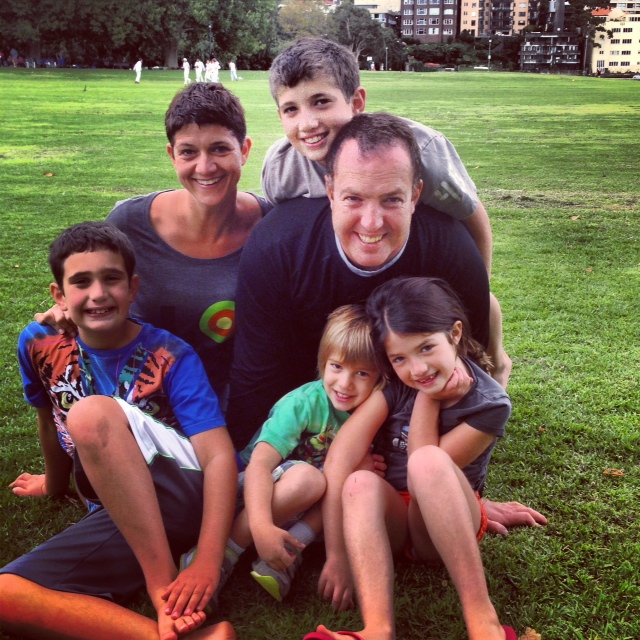
Kids. Husband. Sister. Friends. Out-of-the-blue text from Canada. Extra kisses for mom, and squeezy hugs that say I’m here. The one who saw me not quite holding it together at pick-up and whispered in my ear that if there’s anything I need… Small town, big hearts.

And some days, I don’t cope. I’ve had a few of those. Eaten too little. Slept too much.

There are days when I totally lose perspective. When the new telephone system at the pediatrician’s office makes me so angry, I almost throw the phone on the floor. When going to the grocery store feels like climbing Mount Everest. The highest altitude I’ve ever been at is 11,000 feet – I don’t do well up there. The air is too thin. And cold. Makes me nauseous.

But then, I’ve also found perspective. I have friends who’ve lost brothers and parents just this past week, who’ve found out about life-threatening cancers, whose children have had surgery. Running out of milk is really nothing. It doesn’t take much to keep perspective. Yes, they are complicated, difficult days but the human spirit is strong, and I will survive (another great song!).

And that spirit and heart can wallow for so long before they need to feel useful, creative, worth something. Four banana breads worth. Because I cleaned out the freezer, and discovered 30 frozen bananas – no exaggeration. Sometimes I cope by cleaning (not often, circumstances are usually pretty dire) and by baking – which usually sounds like a great idea, and smells delicious, but in reality I’m regretting it as soon as I distractedly spill a cup of flour on the floor, and the eggs don’t crack cleanly into the bowl but drip onto the counter, and the kitchen looks like it was attacked by a tiny army of four-year-olds (he was helping), and why am I making four banana breads when I only have two pans, and now I have to clean up this mess… not coping!

Breathe. A little alt rock. Another cup of tea. Get perspective.

The worst week ever. But not writing about it is more of a cop-out than writing about it. Because that’s how cope. If you’d like a cup of tea and a slice of yummy banana bread, I’m here.

Remembering Madiba

I couldn’t take my eyes off the blonde woman in the pink sweater, as she swayed to and fro with a tender smile on her face, singing to the cute little black girl she held in her arms. In the midst of a huge crowd, she was oblivious to the cameras as she sang, “Nelson Mandela, Nelson Mandela” in tribute to one of the greatest human beings our world has ever seen.

This was CNN’s coverage, live from Johannesburg, South Africa on Thursday, December 5, minutes after the announcement that the beloved leader had passed. At 1am South Africa time, while my father-in-law drove to Mandela’s home and joined the crowds gathered to celebrate this exceptional man, I was watching from the floor of my bedroom, thousands of miles away in California.

And as I continued to watch CNN over the next few days, and read the tweets from media in the US, South Africa, Israel, as I refreshed my Facebook feed and liked friends’ status updates when they changed their profile pictures to smiling faces of Madiba, paid him their respects, shared their favorite Mandela quotes and tribute videos, I realized how far away from South Africa, from Mandela’s South Africa, I really was.

I think of myself as a small-town girl, from Pretoria. In truth, Pretoria is a big city. Thirty miles north of Johannesburg, it’s the national capital, home to the Union Buildings where presidents, including Mandela, are inaugurated and where most government business is conducted. A couple million people live in Pretoria. It has its own university – the University of Pretoria – and its own rugby team – the Blue Bulls. Theaters, schools, shopping centers, restaurants, green leafy suburbs, a bustling central business district, hospitals. There is nothing small-town about it.

Except in the way I grew up – white, Jewish, privileged, sheltered.

My world – and the world of most of the Jewish families living in Pretoria in the eighties – was limited both physically and socially to the suburbs surrounding our Jewish day school and synagogue, with weekend drives to nearby Johannesburg and the Vaal River. Pretty small-town.

Pretoria’s Jewish community was, and still is, largely comprised of anti-apartheid Jews, many of whom were the children and grandchildren of Holocaust and World War 2 survivors – if not survivors themselves – who had emigrated to South Africa from Lithuania, Russia, Germany, Poland. Well-versed in what it means to be discriminated against, oppressed, hated. They were not supportive of a government that perpetuated the same abhorrent schisms.

Fewer Jews settled in Pretoria than in Jo’burg, and the community I grew up in was tight-knit and protective. Seen through my young eyes, it was idyllic despite the apartheid happening around me.

Most white kids growing up in South Africa in the eighties understood apartheid – perhaps not in detail, but we all had a strong sense of the segregation, discrimination and oppression happening around us. It was a part of our lives: our housekeepers were mandated to carry identity passbooks with them wherever they went – if they were questioned by police and didn’t have their passbook they were arrested. There were green buses for white people and red buses for black people. Park benches and public toilets had signs bolted on: “Net Blanke – Only Whites” (in Afrikaans and English, not in any other language). The economic and social divide between blacks and whites was enormous, gaping, seemingly unbridgeable.

Some of us knew better than others who Nelson Mandela was, and why he had been in prison on Robben Island for over two decades. For me, a fifth grader in a small Jewish day school in Pretoria, Mandela represented all those millions of people who didn’t have what I had, who couldn’t do what I could. But to my sheltered, young self he was elusive, a name and a face standing for the struggle of the oppressed.

As I moved through high school, the more mature me began to properly understand the tension of the country we were living in. While I’d never known anything other than apartheid, I started to long for the injustice to end. F.W. De Klerk was now president and with the dawn of a new decade, Nelson Mandela was released.

My sheltered world opened up a little. Our high school drama club staged an award-winning play written by our English teacher called The Non-Musical Human Rights Take it or Leave it Children-of-the-Rainbow Part 2. It poignantly tackled themes of censorship, oppression, human rights and ultimately the creation of a “Rainbow Nation.” I was 15-years-old – I had never really thought about any of this before, even though it was what I grew up with.

The arts in South Africa vibrantly exploded when Mandela walked free. The Rainbow Nation he was creating found true expression in living color on stage, in writings, TV, paintings, comedy shows, music – all reflecting the euphoria we could feel in the land. It was a time of hope and possibility. Mandela’s smiling face was everywhere – he amazingly harbored no grudge, no blame, he was committed to moving forward, to replacing the hate and segregation with love and reconciliation. That gaping divide was already smaller.

I was in my final year of university when I voted in South Africa’s first democratic election. I stood in line with my sister outside the Great Hall at Rhodes University, together with all the men and women that cleaned and maintained those beautiful old buildings, that cooked for us and joked with us when they served our food, or swept out the lecture halls after class. I can’t even begin to imagine what they thought and felt about finally having basic human rights returned to them, but I was overwhelmed with gratitude that it was happening, and that I was there.

Madiba-at-Rugby-World-Cup-1995

leavenogirlbehind.org

My most vivid memory of a unified, free South Africa is watching the Springboks win the rugby world cup in 1995. Nothing short of spectacular! For me, that victory epitomized what Madiba had achieved for the country – using a national sport historically played by white Afrikaners, loved by the very people who tried to keep him silent and locked away, to build a bridge across a gaping divide. Mandela wearing the Springbok colors of green and gold with that smile that lights up the world is a powerful reminder of his belief that if people can learn to hate “they can be taught to love, for love comes more naturally to the human heart than its opposite.”

I never really lived in Mandela’s South Africa. I left four years after that election. I was barely a part of the rainbow nation. I sit in my car outside the supermarket in Oakland, watching the Soweto Choir in Woolworths sing the sweetest, most moving tribute to their Tata Madiba, on YouTube, with tears in my eyes and a smile on my face, and I feel very, very far away.

My daughter takes the photograph of her father shaking Mandela’s hand up to her room, just to look at it for a little while. And even though I am far away, I am South African, and I am humbled by the magnitude of the legacy of this tremendous human being, and so grateful for his tireless struggle for a better, equal life for all South Africans and for humankind.

“For to be free is not merely to cast off one’s chains, but to live in a way that respects and enhances the freedom of others.” -Nelson Mandela, The Long Walk to Freedom

Totally Californian… essentially South African

Summer rain. I miss it. The clouds scurry in – gray and heavy. The temperature drops, but only a little. Fat droplets start to fall, one at a time, and within minutes it’s raining loudly. It’s rain with a purpose. Not gentle and misty, not dreary and relentless. Thirst quenching, life-giving, happy and warm. Almost as quickly as it begins, it’s over.

Clear skies and sticky air. The trees are bright, and the birds are loud. Water drips from the leaves onto the tiled walkway. And the intoxicating fragrance of magnolia is suddenly everywhere.

I was disoriented. For a moment I was back in Pretoria, South Africa – where it rains, like this, almost every afternoon in early summer. Growing up, I would stand at the open front door, watching and waiting. Loving the steady sound of the rain on the roof and the windows. Knowing it would stop soon, the sun would come out in moments, the birds would start to call and I would breathe in that heady magnolia. Africa.

But this was Australia!

As the confused clouds blew across my brain, my heart contracted with longing. The smells and sounds coalesced into a blanket of nostalgia, lightly draping my shoulders.

Sydney

Sydney, Australia is a beautiful, fun, happy city – home to the Sydney Opera House, the Harbor Bridge, magnificent water views wherever you look, cuddly koalas and fierce-looking kangaroos. Absolutely worth the 14-hour flight and crazy time change, kids in tow. It has an incredibly efficient ferry system, an amazing zoo, gorgeous parks and breathtaking beaches.

And a layer of “South African-ness” I was not expecting. Which left me surprisingly homesick.

Of course, I know that many South Africans have made Sydney their home – it made our trip even more special to spend time with old friends from elementary school and college while we were there, reconnecting, reminiscing, introducing our kids to one another.

What took me by surprise was how familiar the city felt to me. In the southern hemisphere. Chanukah in summer. Houses built from brick not sheetrock, and neighborhoods reminiscent of Johannesburg in their layout. Even the ocean felt more Indian than Pacific! Nobody asked where I was from – in California sometimes my accent sounds Australian… or Irish… or British. In Australia it’s clearly South African.

And because there is such a large South African community, typical South African foods are easily available, foods that define many of my childhood memories, and that my American children now love: biltong (puts beef jerky to shame – there is no comparison), boerewors (delicious sausage, the flavor can only be created by South Africans), chocolates, cookies and Joko tea, Nando’s Chicken (a franchise imported all the way from Johannesburg to Sydney, London, Washington DC – but sadly not San Francisco). If you know South Africans living outside of South Africa, you know how much we crave our SA food!

At the “South African shop” in Rose Bay, the owner recognized our last name – he knows my father-in-law – and the manager’s daughter went to high school with my husband. The couple staying in the apartment next door to us felt as familiar to me as my own aunt and uncle – even though I was meeting them for the first time! They hugged me when they met me, and kissed my kids, and for a minute I thought maybe I had known them somewhere before. But it was enough that we were Jewish South Africans for all of us to feel connected. She was making chopped liver for Shabbat dinner, and he cracked the same kind of jokes my dad does, and they used slang South African words we hadn’t heard in so long… and the longing squeezed my heart again. Homesick.

But I’ve lived in the Bay Area for 15 years. We left six weeks after our wedding, and my children are Californian. They have American accents, they like beef jerky and they think a costume is what you wear on Purim or Halloween (it is, but in South Africa it’s also your bathing suit). When I think “home” I see the Bay Bridge, not the telecom tower I rode my bike to as a child in Pretoria.

As we enjoyed our week in Sydney, swimming in waves that felt like those in Durban, having braais (barbecues) with old friends, waiting out the afternoon rain, those confused clouds continued to scurry across my mind.

Back home in the Bay Area, my friends understand when I reply ya instead of yes, I have found the best boerewors from a kosher South African butcher in Atlanta (they ship it next-day on dry ice!), and we have braais as often as we can. It rains in winter – sometimes incessantly – but during spring and summer I can smell magnolia and jasmine all over.

am South Africa homesick… but in the Bay Area, I am home.

Sydney, Australia November 2013

Sydney, Australia
November 2013

Whole Lotta Country

(Hit play and turn the volume way up!)

When I was ten-years-old I saw Kenny Rogers and Dolly Parton perform the song “Islands in the Stream” on TV. Dolly was wearing a whispy, flowing black dress, her bottle-blonde hair in its signature Dolly-style. Kenny wore a tux and his mane of gray made a big impression on me. They were both very glam. Exotic even, to my wide eyes. They stood together on the stage, and Dolly waved her dress and tapped her heels as she sang. It was that southern drawl that drew me in, as much as the catchy music and lyrics. Bitten by the Country Bug.

dailymail.co.uk

dailymail.co.uk

Music played in our house and in the car all the time when I was growing up, but it was never country music. My mom loved rock – Dire Straits, Talking Heads, Fleetwood Mac – and everything by Billy Joel and Elton John. My sister and I would listen to the Top 40 every Sunday – we knew all Madonna’s songs by heart, every Michael Jackson move, we loved A-ha and Duran Duran. I heart the 80s! Definitely no room for country tunes – that “Islands in the Stream” performance was a one-hit-wonder for me.

Until I moved to the U.S.

A Friday afternoon in 1999 found me driving up to Tahoe with my Texan friend – she has the strongest southern accent of anyone I know, it’s possibly the reason I’m friends with her, just to hear her say “y’all” over and over! She turned up the volume to Garth Brooks’ “Papa Loved Mama.” I couldn’t get enough of it! Those lyrics – Mama’s in the graveyard, Papa’s in the pen… Damn.

For someone like me who loves telling stories, there’s no greater storyteller than a country music artist. Every song is a heavily dramatic narrative – about love, and relationships gone awry, boys seeking daddy’s approval on the wide, open prairie, and misunderstood mothers. Set to the soulful or catchy tune of an expertly strummed guitar, these songs reach in and squeeze my heart with every beat. Add that southern drawl that I wish was mine, and I’m lost to the music of Nashville.

It’s the wannabe actor in me, I’m sure, that’s drawn to all things country. When I hear Trisha Yearwood sing “She’s in Love with the Boy” I play out the scene in my head: chickens pecking the ground, high school sweetheart, dad doesn’t approve, mom saves the day. My favorite song this past summer was Florida Georgia Line’s “Cruise” – backroad town, boy meets girl, heavy guitar, pick-up truck on the lake. Dra-ma-tic!

It’s not for everyone – I part ways with many in my love of country music. I’m getting used to the surprised looks and eye rolls when I disclose that yes, I did see Garth and Trisha in concert a couple years ago – best concert ever! Or that the TV show Nashville (musical drama series about fading country music superstars and hot new talent) has become my must-see Wednesday night viewing – mostly for the music, and also because of the beautiful, expansive Nashville scenery, the perfectly country hair and boots, not to mention haunting guitar performances by unshaven cowboys at the Bluebird Café, where every country musician is discovered. Better than Game of Thrones! How can you not watch it?

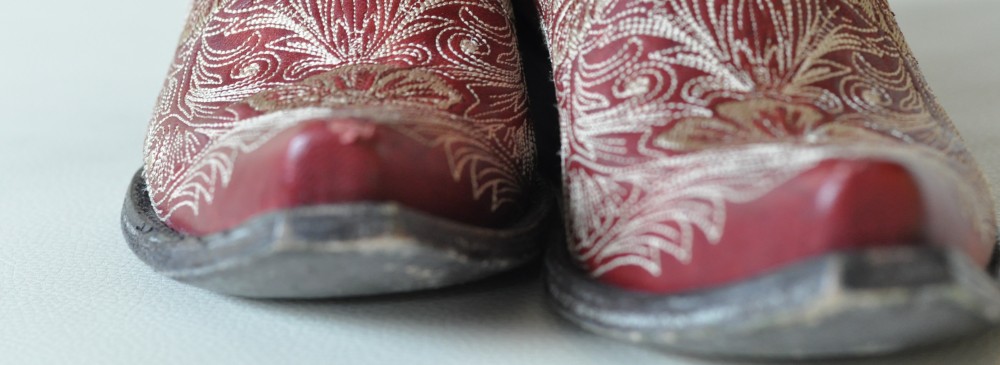
My red cowboy boots have become as essential to me as flip flops – I’m so glad it’s fall so I can now wear them every day. I’m working on saying “y’all” more authentically (my South African accent gets in the way). Last night was the Country Music Awards in Nashville – every song was fantastic! But the one I loved the most was sung by Kenny Rogers and a Dolly-replacement (Jennifer Nettles)… I was back in my parents’ living room in Pretoria, circa 1984, mesmerized by “Islands in the Stream.”

Rock ‘n Roll always… but definitely a whole lotta Country!

Hashtag Facetime

My boys were playing a game on Sunday that involved a lot of shouting and leaping off beds and onto beanbags – nothing out of the ordinary. Usually I don’t pay attention at all, except to wish they would do it a little more quietly. But then I became aware that their language of play went something like, “Hashtag-jump-higher!” Followed by, “Hashtag-shut-up!” And then, “Hashtag-look-at-me!” Etcetera, etcetera. By the time we went out for the day, the older three were actually calling the four-year-old Hashtag. Talk about Damaging Life Events.

My kids have too many electronic gadgets, are too connected to their ipods/ipads/tv/wii/instagram/internet, and too disconnected from Real Life. I have to remind them daily not to turn on the TV until after dinner, please don’t play Minecraft even if your homework is done, go outside and ride bikes with your brother, it’s a beautiful day! I tell the little one he can watch Mickey Mouse Clubhouse after his bath, and at 3.30pm he asks if he can take a bath now.

The kids groan and say, “But Mooom.” Yet with my gentle insistence they slowly venture outside, find the pogo stick and the frisbee, and eventually get up to good, ol’fashioned, outdoor fun (actually, it’s when I yell at the top of my lungs, “DON’T ASK ME AGAIN AND GET OUTSIDE RIGHT NOW” that they hightail it to the basketball hoop).

And now “hashtag” has made its insidious way into even their non-electronic imaginative play. O.M.G. When I hear it, I see Jimmy Fallon and JT’s hilarious Hashtag Sketch – they have an entire conversation using the word “hashtag” accompanied by a hand movement signing a hashtag. It demonstrates how ridiculous we’ve become ascribing all our experiences to a phrase #allinoneword, and also pokes fun at how connected to cyber-world we all need to be. I cried real comedic tears watching my two favorite celebs play that scene, laughing at myself in it all – but now I realize even my baby boy knows what a hashtag is, and also, he taught his preschool teacher how to use her iPhone! Not. That. Funny. Now.

I ban the kids from anything that has a screen for the rest of the day. We go to the beach. They’re still calling J the H-word but at least they are looking into each other’s eyes while they wrestle in the sand and chase seagulls instead of angry birds.

In the afternoon, I receive a text from my friend in Christchurch, New Zealand. She tells me our sons are FaceTiming right now. I heard talking from the boys’ bedroom, but figured it was to each other, not to friends a day away! So much for my screen ban. But I can’t be mad or indignant. My son was crushed when his good friend moved to New Zealand, yet they get to talk to each other every week. And not only talk – interact as if they’re in the same room.

Hashtag

Grandparents live half a world away. Friends come and go. Cousins don’t really know each other. But before my grandmother died, she got to see her youngest grandson on Skype – she never held him in her arms, it’s true, but she saw him move, and open his eyes and she knew what he looked like when he cried and smiled.

My parents and in-laws visit us at least once a year. It’s heartbreaking when they leave. Nothing replaces in-person, physical proximity when it comes to building relationships. On the day of departure, I can’t help but think of our grandparents leaving Lithuania and Latvia in search of better in South Africa, how they left their families behind, really knowing that they would never see them again. And they didn’t.

My kids’ grandparents watch them grow on Skype. We send videos of hip-hop performances and karate gradings. My mother-in-law sends me photos of Jacaranda trees blooming in Johannesburg because she knows how much I adore and miss them. My daughter has been known to text her grandmother in the middle of the night during a sleepover. We feel connected to friends who have moved away, and even to people who live nearby but life is busy and we just don’t get together.

Is it necessary for a preschooler to know how to take photos with an iPhone? Of course not. But how lucky he is to be able to see his Grampa whenever he wants, even though they are continents and time zones and miles apart.

Yes, we are terribly connected to our iDevices – and so are our children. But we are connecting with each other too. I don’t want my son to be known as Hashtag, but #ilove21stcenturycommunication.