Totally Californian… essentially South African

Summer rain. I miss it. The clouds scurry in – gray and heavy. The temperature drops, but only a little. Fat droplets start to fall, one at a time, and within minutes it’s raining loudly. It’s rain with a purpose. Not gentle and misty, not dreary and relentless. Thirst quenching, life-giving, happy and warm. Almost as quickly as it begins, it’s over.

Clear skies and sticky air. The trees are bright, and the birds are loud. Water drips from the leaves onto the tiled walkway. And the intoxicating fragrance of magnolia is suddenly everywhere.

I was disoriented. For a moment I was back in Pretoria, South Africa – where it rains, like this, almost every afternoon in early summer. Growing up, I would stand at the open front door, watching and waiting. Loving the steady sound of the rain on the roof and the windows. Knowing it would stop soon, the sun would come out in moments, the birds would start to call and I would breathe in that heady magnolia. Africa.

But this was Australia!

As the confused clouds blew across my brain, my heart contracted with longing. The smells and sounds coalesced into a blanket of nostalgia, lightly draping my shoulders.

Sydney

Sydney, Australia is a beautiful, fun, happy city – home to the Sydney Opera House, the Harbor Bridge, magnificent water views wherever you look, cuddly koalas and fierce-looking kangaroos. Absolutely worth the 14-hour flight and crazy time change, kids in tow. It has an incredibly efficient ferry system, an amazing zoo, gorgeous parks and breathtaking beaches.

And a layer of “South African-ness” I was not expecting. Which left me surprisingly homesick.

Of course, I know that many South Africans have made Sydney their home – it made our trip even more special to spend time with old friends from elementary school and college while we were there, reconnecting, reminiscing, introducing our kids to one another.

What took me by surprise was how familiar the city felt to me. In the southern hemisphere. Chanukah in summer. Houses built from brick not sheetrock, and neighborhoods reminiscent of Johannesburg in their layout. Even the ocean felt more Indian than Pacific! Nobody asked where I was from – in California sometimes my accent sounds Australian… or Irish… or British. In Australia it’s clearly South African.

And because there is such a large South African community, typical South African foods are easily available, foods that define many of my childhood memories, and that my American children now love: biltong (puts beef jerky to shame – there is no comparison), boerewors (delicious sausage, the flavor can only be created by South Africans), chocolates, cookies and Joko tea, Nando’s Chicken (a franchise imported all the way from Johannesburg to Sydney, London, Washington DC – but sadly not San Francisco). If you know South Africans living outside of South Africa, you know how much we crave our SA food!

At the “South African shop” in Rose Bay, the owner recognized our last name – he knows my father-in-law – and the manager’s daughter went to high school with my husband. The couple staying in the apartment next door to us felt as familiar to me as my own aunt and uncle – even though I was meeting them for the first time! They hugged me when they met me, and kissed my kids, and for a minute I thought maybe I had known them somewhere before. But it was enough that we were Jewish South Africans for all of us to feel connected. She was making chopped liver for Shabbat dinner, and he cracked the same kind of jokes my dad does, and they used slang South African words we hadn’t heard in so long… and the longing squeezed my heart again. Homesick.

But I’ve lived in the Bay Area for 15 years. We left six weeks after our wedding, and my children are Californian. They have American accents, they like beef jerky and they think a costume is what you wear on Purim or Halloween (it is, but in South Africa it’s also your bathing suit). When I think “home” I see the Bay Bridge, not the telecom tower I rode my bike to as a child in Pretoria.

As we enjoyed our week in Sydney, swimming in waves that felt like those in Durban, having braais (barbecues) with old friends, waiting out the afternoon rain, those confused clouds continued to scurry across my mind.

Back home in the Bay Area, my friends understand when I reply ya instead of yes, I have found the best boerewors from a kosher South African butcher in Atlanta (they ship it next-day on dry ice!), and we have braais as often as we can. It rains in winter – sometimes incessantly – but during spring and summer I can smell magnolia and jasmine all over.

am South Africa homesick… but in the Bay Area, I am home.
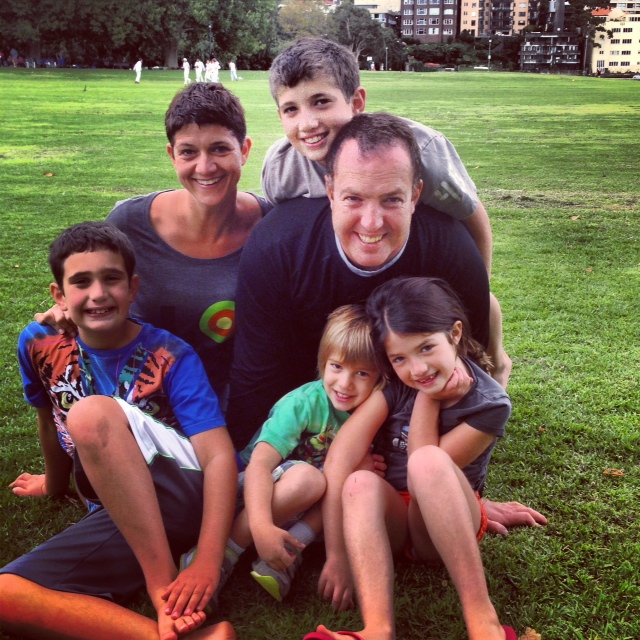
Sydney, Australia November 2013

Sydney, Australia
November 2013

What I learned today in second grade

She could’ve been talking about her spelling test, she described the story to me so matter-of-factly, her little face betraying no sadness or hurt. “At recess, Mom, she said I was too small to play. So I just sat on the stairs and watched.” It was the third day in a row that she’d been told she wasn’t wanted, for one reason or another. She was used to it.

There’s always a Queen Bee, buzzing busily in the circles of female friendships. Her role is subtle in younger years, she hasn’t yet been crowned. But by the age of six, there she is her Royal Highness, cape flowing regally from her narrow shoulders, sparkling crown planted on her head – giving her free reign to determine who gets to be friends with whom, what games they will play at recess, whether your new boots are hot or not. If you are in her favor, you are golden. She casts her royal glow on you, and you feel that you are walking on air, that the chariot the two of you ride together will actually sprout wings and soar above all the lowly subjects on the playground. There is nothing you can’t do together. There is nothing you can’t do alone! Until you are no longer in her favor – one day you’re in, the next you’re OUT. Yes Your Majesty. Curtsey. Exit.

Nobody dares to unseat the Queen. It’s as much the order of things on the playground as it is in the beehive. The perception is that without the Queen – this Queen – it would all fall apart. And the industrious second grade she-bees need hierarchy and order as they buzz about their busy days of school, recess, hip-hop, birthday parties, sleepovers.

“Sage,” I say in a barely-controlled pseudo-calm voice, “why didn’t you tell her she can’t say you can’t play, and that she hurts your feelings?”

“Mom,” again so deadpan, expressionless, “you know I have a hard time saying that. I wanted to, but I just can’t get those words out.”

Ugh. Yes, I do know. I know exactly how she feels. I know how uncomfortable confrontation makes me. I know she’s worried that if she speaks up, expresses her indignation and hurt at being excluded, Queenie might alienate all the other bees from her, and she’ll be all alone at recess with no prospect of a buddy to walk with to hip-hop and no hope of a sleepover ever.

My heart breaks into sharp shards as I look into her no-longer-innocent green eyes. I imagine picking up one of those shards and piercing Queen Bee’s fuzzy little body with it. You can’t say you can’t play! Preschool 101.

Worst of all, my little bee is afraid to buzz.

Every day there is another exclusionary incident. She wouldn’t let Sage tell a story. She sneakily lured Sage’s friend away from her at lunchtime. She told Sage she wasn’t good at basketball.

Sage and I role-play: what would she say next time QB told her she couldn’t play? You don’t get to tell me I can’t play. What would she say when QB told her to stop telling her story? That hurts my feelings.

I encourage Sage to eat lunch with different girls, to share her stories with somebody else. I imagine her little heart beating loudly in her chest while she tries to muster the courage to speak up to QB, to tell her that the things she says don’t feel good – because, 32 years after being in second grade, my own heart pounds in my throat when I try to do the same. Do we ever really leave the playground?

I stop hearing about QB for a while. Sage seems happy, talks about school and friends, no drama, no incidents. On parent-teacher day, I sit down at the little desk, and there screaming up at me from the self-assessment each child writes, in her still-developing-but-perfectly-formed-no-2-pencil letters, are the words: One friend is mean to me all the time.

There are those shards, so real and sharp I make a fist around one. I look up into her teacher’s kind, unwavering gaze. “Do you know what that’s about?” It bubbles out of me, unfiltered, heated, sticky. I hear myself say, over and over, “She just doesn’t want to tell her how it makes her feel. She’s scared she’ll be alienated from all the other girls.”

Wonderful Teacher quietly nods. She knows exactly what I’m talking about (of course, she’s not a second grade teacher for nothing). “It’s important to teach the children that if being around a friend doesn’t make them feel good, that’s not a friend.” I simply stare at her. I feel like she is my second grade teacher. “Friends are people you want to be around, and who want to be around you. If it feels bad, it’s not a friendship.”

The bees start buzzing excitedly. Life 101.

Sage spent the next weekend with a different friend, an awesome friend. All weekend. Back-to-back sleepovers. Smiling faces for 48 hours. They were inseparable, happy, busy, together-bees.

I’m never too old to learn the lessons taught in second grade.

Back on the playground, QB looks anxiously about for a few new subjects.