Tea for Two and Two for Tea

There is no better place in the world to enjoy a cup of real English tea than in England.

The thing about tea is that when it’s good, it’s very very good – heavenly actually – and when it’s bad, it’s horrid. And we don’t get very good tea in America. We get Lipton. And Lipton is horrid.

I’m not talking about herbal tea. The U.S. has fabulous herbal teas, many even locally produced like Oakland’s very own Numi Tea, and I love me a cup of organic mint or chamomile tea after a meal as much as the next guy.

But that’s not the tea I adore. My tea is real English breakfast tea, milk two sugars (although now I’m trying to eliminate sugar because I live in California where everyone is eliminating something from her diet and I had FOMO). So real English breakfast tea for me, with milk. And by real I mean not a U.S. brand. This is the Starbucks nation after all. I mean a brand from England. Or anywhere in the U.K. Or South Africa. Australia. I guess a brand from anywhere they play cricket. Because tea and cricket go together like Laverne and Shirley, Danny and Sandy, E.T. and Elliott (all of whom are American and would probably never drink tea, but rather double espressos. Sandy is Australian though – she definitely drinks tea).

Tea makes my day. It starts my day. Often ends my day. Calms the chaos (all that caffeine) and enhances the calm (more caffeine). It has moved me through moments of terrible sadness and despair, and held me happier in the happy. Weekend afternoons are always about tea, whether rain or shine, soccer or swimming (no cricket in my very American family) because that’s how our parents do it in South Africa, and that’s how their parents did it too. One of my favorite memories is slurping tea from my grandmother’s saucer, like a cat.
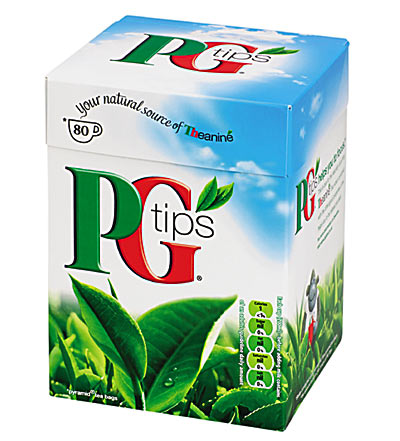
And last week I did get to enjoy tea in England. And it was delicious. It wasn’t even a special brand – just regular PG Tips, but the English kind. And it tasted so much better. I didn’t pay attention to it while I was drinking copious cuppas in England. Rather, I noticed it when I came home. Because when I made a cup of tea on Saturday morning – real English tea – in my own kitchen, it tasted different.

And it could’ve been because it was rainy and damp in London all week, or because the water tastes different over there (the big story last week was that traces of cocaine have been found in Britain’s drinking water), or that I was using brown sugar instead of white sugar (or no sugar).

It could have been because of all those, or none of those or some of those. But it was definitely because of who I was drinking those cups of tea with in London.

A friend so dear and special. A friend who has known me 35 of my 40 years. Who wanted to clear the slate on a little dispute we had in high school. Who loves “Mad Men” as much as I do and for all the same reasons, Don Draper being only one of them. Who remembers things I have forgotten and who can’t believe the things I have remembered. Who took me to see the fantastical cut-outs of Henri Matisse and then schlepped the banks of the Thames with me in search of tea and scones. We came up empty-handed – can you imagine? No traditional tea and scones on the south banks of the Thames?!

We made tea for each other every single day, many times a day, during my week-long stay in London. We sat together at the beautifully distressed wooden table in her kitchen, while her slightly unruly English garden steps away on the other side of the glass door soaked up the gentle rain. She thought I made the best cup of tea, and I thought she did.

Because a lot of love and decades of friendship, book reviews, gossip and chitchat, fashion do’s and don’ts and movie synopses, big decisions, hard conversations, silly stories, and so many tears and hysterical laughter and comfortable silences were poured into every cup of tea, made each one stronger, taste better, last longer.

I missed her on Saturday morning when I drank my suddenly strange-tasting tea without her. And it may well be there is no better place than England to drink real English tea – or it may just be that I miss my forever friend.

Because the thing about finally being together after a long time apart, about spending wonderful time with that special someone I haven’t seen for a while, is that I miss them more than ever after.

And the tea tastes a little less satisfying… but only until next time.

What I learned today in second grade

She could’ve been talking about her spelling test, she described the story to me so matter-of-factly, her little face betraying no sadness or hurt. “At recess, Mom, she said I was too small to play. So I just sat on the stairs and watched.” It was the third day in a row that she’d been told she wasn’t wanted, for one reason or another. She was used to it.

There’s always a Queen Bee, buzzing busily in the circles of female friendships. Her role is subtle in younger years, she hasn’t yet been crowned. But by the age of six, there she is her Royal Highness, cape flowing regally from her narrow shoulders, sparkling crown planted on her head – giving her free reign to determine who gets to be friends with whom, what games they will play at recess, whether your new boots are hot or not. If you are in her favor, you are golden. She casts her royal glow on you, and you feel that you are walking on air, that the chariot the two of you ride together will actually sprout wings and soar above all the lowly subjects on the playground. There is nothing you can’t do together. There is nothing you can’t do alone! Until you are no longer in her favor – one day you’re in, the next you’re OUT. Yes Your Majesty. Curtsey. Exit.

Nobody dares to unseat the Queen. It’s as much the order of things on the playground as it is in the beehive. The perception is that without the Queen – this Queen – it would all fall apart. And the industrious second grade she-bees need hierarchy and order as they buzz about their busy days of school, recess, hip-hop, birthday parties, sleepovers.

“Sage,” I say in a barely-controlled pseudo-calm voice, “why didn’t you tell her she can’t say you can’t play, and that she hurts your feelings?”

“Mom,” again so deadpan, expressionless, “you know I have a hard time saying that. I wanted to, but I just can’t get those words out.”

Ugh. Yes, I do know. I know exactly how she feels. I know how uncomfortable confrontation makes me. I know she’s worried that if she speaks up, expresses her indignation and hurt at being excluded, Queenie might alienate all the other bees from her, and she’ll be all alone at recess with no prospect of a buddy to walk with to hip-hop and no hope of a sleepover ever.

My heart breaks into sharp shards as I look into her no-longer-innocent green eyes. I imagine picking up one of those shards and piercing Queen Bee’s fuzzy little body with it. You can’t say you can’t play! Preschool 101.

Worst of all, my little bee is afraid to buzz.

Every day there is another exclusionary incident. She wouldn’t let Sage tell a story. She sneakily lured Sage’s friend away from her at lunchtime. She told Sage she wasn’t good at basketball.

Sage and I role-play: what would she say next time QB told her she couldn’t play? You don’t get to tell me I can’t play. What would she say when QB told her to stop telling her story? That hurts my feelings.

I encourage Sage to eat lunch with different girls, to share her stories with somebody else. I imagine her little heart beating loudly in her chest while she tries to muster the courage to speak up to QB, to tell her that the things she says don’t feel good – because, 32 years after being in second grade, my own heart pounds in my throat when I try to do the same. Do we ever really leave the playground?

I stop hearing about QB for a while. Sage seems happy, talks about school and friends, no drama, no incidents. On parent-teacher day, I sit down at the little desk, and there screaming up at me from the self-assessment each child writes, in her still-developing-but-perfectly-formed-no-2-pencil letters, are the words: One friend is mean to me all the time.

There are those shards, so real and sharp I make a fist around one. I look up into her teacher’s kind, unwavering gaze. “Do you know what that’s about?” It bubbles out of me, unfiltered, heated, sticky. I hear myself say, over and over, “She just doesn’t want to tell her how it makes her feel. She’s scared she’ll be alienated from all the other girls.”

Wonderful Teacher quietly nods. She knows exactly what I’m talking about (of course, she’s not a second grade teacher for nothing). “It’s important to teach the children that if being around a friend doesn’t make them feel good, that’s not a friend.” I simply stare at her. I feel like she is my second grade teacher. “Friends are people you want to be around, and who want to be around you. If it feels bad, it’s not a friendship.”

The bees start buzzing excitedly. Life 101.

Sage spent the next weekend with a different friend, an awesome friend. All weekend. Back-to-back sleepovers. Smiling faces for 48 hours. They were inseparable, happy, busy, together-bees.

I’m never too old to learn the lessons taught in second grade.

Back on the playground, QB looks anxiously about for a few new subjects.