New Kid in the Neighborhood

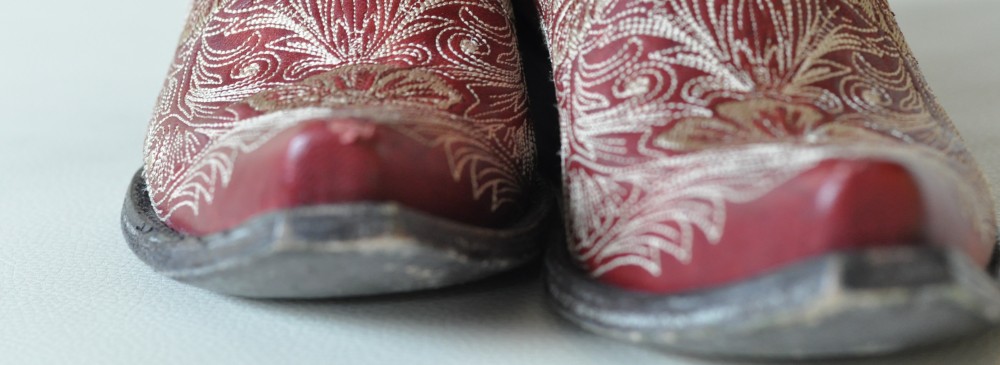
new kid

It sucks to be the new kid. Lonely and intimidating. It feels like everyone is noticing you, snap-judging you and the dorky whiter-than-white shorts you chose to wear, but really nobody is… and you’re not sure which you’d prefer.

I was 13 when my family left South Africa. I departed the cozy womb of my small 8th grade class at the only Jewish high school in Pretoria, and entered the loud, frenetic, unfiltered school of new everything in Hod Hasharon, Israel. The faces I knew even better than my own, the voices I had heard every day since Kindergarten, the secrets and jump-rope games (24 Robbers Came Knocking at My Door!), netball practices and Liquifruit juice boxes, blue blazer with the school badge and sensible black shoes… all were replaced with unfamiliar, uncomfortable, daunting and overwhelming.

I stood in the doorway of my new class, in my ridiculous white shorts, my almost-grown-out perm caught up in a scrunchie (omg I know, but it was 1987) and tried to smile as every strange face turned toward me. Gulp. Then turned away. Double gulp. Would I ever feel familiar here? Would I ever learn all their names? Recognize these voices? Would anyone ever greet me, never mind tell me a secret? Who wears white shorts when she wants to blend in and be cool? We called the teachers Shmulik, Malka, Naomi… Mrs West, Mrs Burger and Mr Coetzee were unimaginably far away.

Within weeks, I had ditched the white shorts. Learnt how to play Five Stones and basketball. Fell in mini-love with a cute, shorter-than-me boy named Dani. And shared laughs, secrets, dance moves and sleepovers with my new friends. Lonely, scary and intimidating made way for happy and comfortable. Hebrew colored my dreams. Unfamiliar became home, and I never did miss wearing that blue school blazer.

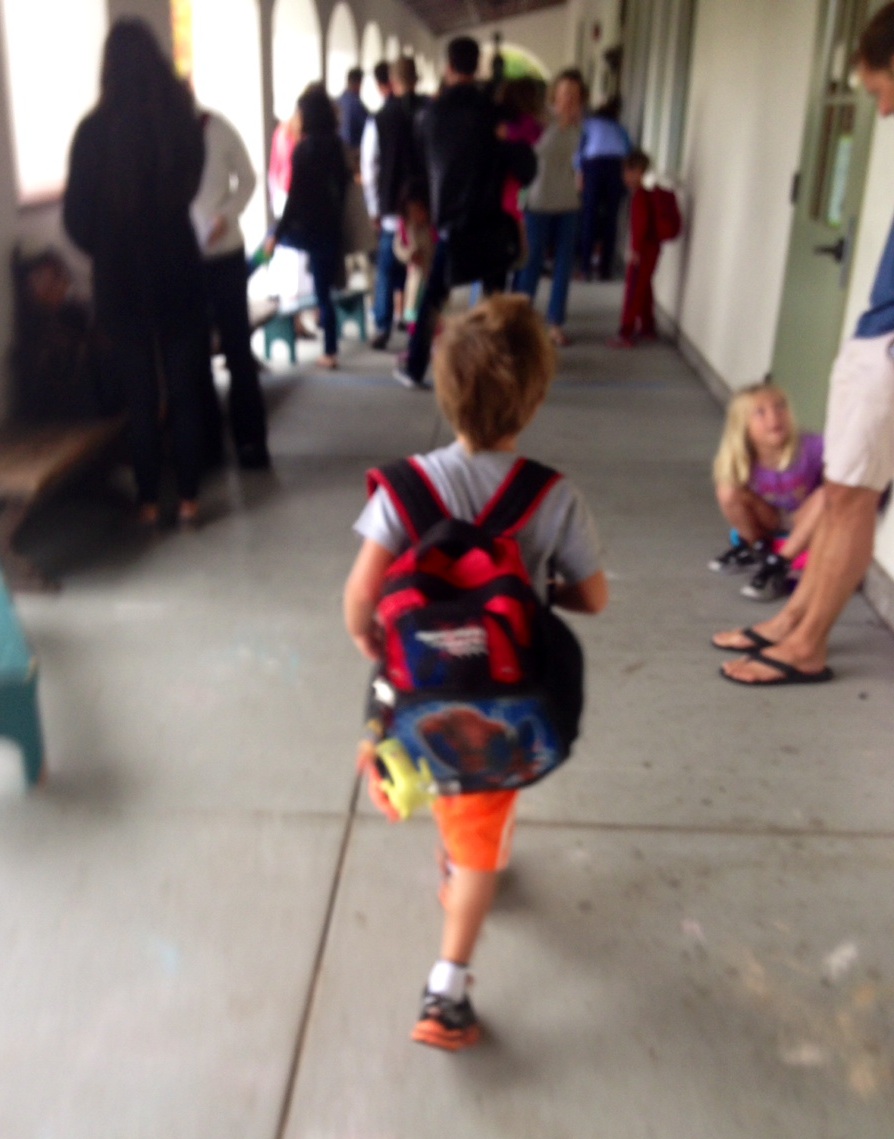
Twenty three years and a drastic hairstyle change later, I was once again the intimidated, lonely new kid. This time with a baby in my arms, a clingy child wrapped around one shin, and a flailing, angry seven-year-old. Who inappropriately and very loudly declared to all those gathered on the blacktop in excited anticipation of the first day of school: “I’m not going to school with these freaks!” He didn’t declare it loudly, I correct myself. He yelled it. And by all those on the blacktop, I mean the entire student, teacher and parent population. He too was a new kid.

Heads turned. The baby cried. My little girl tightened her koala-grip on my leg, and I tried to dash after my indignant, scared boy who didn’t know what to do with these new feelings of bewildered and uncomfortable loneliness. I felt them too, and I wished for any length of badly-permed hair to hide behind, instead of the short spikes that were surely standing every which attention-grabbing way on top of my head.

New year. New school. New teacher. New friends. I hoped. For both of us.

It had been decades since I had been the new kid. Since I had felt out of my element. Lonely and alone. And there I was, wishing I were anyone, anywhere else, the 36-year-new kid, feeling 500 hundred shades of glaring invisible on the blacktop.

My newly minted first-grader was mad. He hadn’t wanted to leave his old school. The friends he had known, played with, shared meals, toys, germs with since he was two-years-old. That was my decision. And his dad’s. And as my heart shattered on the blacktop into so many sad and lonely pieces that first day of new school, when he floundered and raged against a decision that wasn’t his, I wondered if we had done the right thing. For him or for me.

“It’ll be okay. Here, give me the baby,” a kind, firm voice said in my ear. She had a baby and a clingy kid of her own to deal with, but she whisked mine away so that I could help my distressed son. And myself. Her blue eyes looked straight into mine, “First days are hard. It’ll be okay.” I passed the baby into her waiting arms. And I believed her.

Four years later, there is not a new kid my son doesn’t notice. Befriend. Invite over. He shows them the pass-through in the fence between our house and the neighbors’, and all the kids fill water balloons and throw them at each other. They leave flip flops, hair ties and other bits of themselves in their wake.

“It’ll be okay,” the blue-eyed-stranger-now-friend said, when she drew me out of my lonely, bewildered new-kid moment on the blacktop. It’s not okay. It’s wonderful. Because of her. And all the moms and dads and kids and teachers and grandparents and people like her. It’s a small-ish town, with a big, big heart. Where everyone is a neighbor, a friend, someone to help, to care about. And hopefully the new kids don’t feel new for very long. Especially if they do not wear white shorts!

This post was inspired by the Finish the Sentence Friday prompt, “When it comes to my neighbors…”
Hosted by Kristi from Finding Ninee and guest host Allison from Go Dansker Mom.
Don’t Be Sad It’s Over… Be Glad It Happened

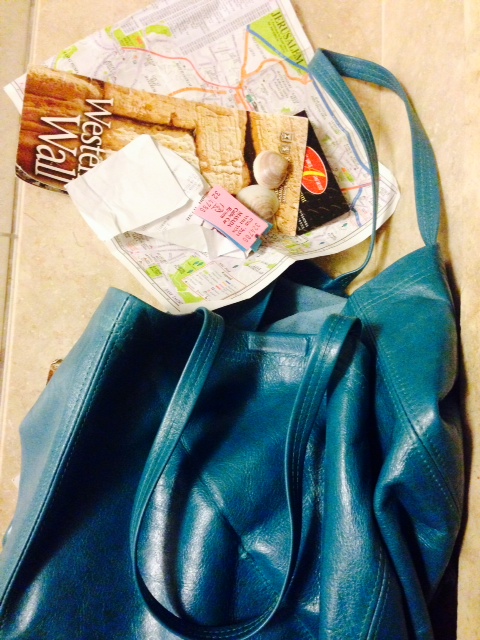
A crumpled up map of the city of Jerusalem. Our route from the hotel to the Tachana Rishona (First Train Station) highlighted. We overshot the Windmill by about 40 steep stairs and two kilometers – and by we, I mean me – and ended up not at all very near the Train Station. Jerusalem is a complicated city to get to know, especially for a grid-lovin’ San Francisco girl like me! The night was young, and we followed our ears to the music and laughter wafting toward us on the dark, warm wind.

bag

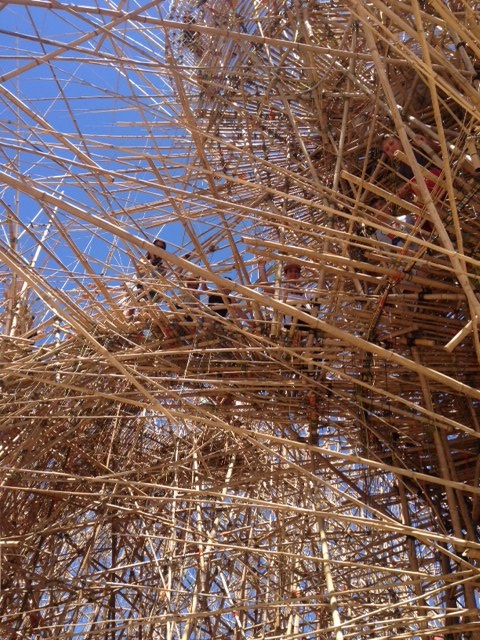
A ticket from the Israel Museum. If you return within three months and present the ticket from your last visit, your entry is free. I’m keeping that ticket. You never know. And their exhibits are amazing. We climbed up, down, into, around, and on top of 10,000 bamboo poles (which look as fragile as a heap of twigs) held together by nothing more than 80,000 meters of climbing rope. Big Bambu. Bigger family bonding. Amazing.

bambu

A black and red card for my favorite falafel place in Jaffa. A guide to the tunnels under the Western Wall. A pinkly pale and gray shell I found on the beach in Herzliya. The smudged, damp and crinkled remnants of our adventures gently spill out of my new, turquoise made-in-Israel bag like the fine grains of Dead Sea salt that scattered on the bathroom floor from my bathing suit this evening.

It’s almost over. And I wish it wasn’t.

Don’t be sad it’s over, I tell myself as we traipse around the market, hug my brother goodbye, watch the video montage at my son’s bar mitzvah party. Be glad it happened.

We celebrated a bar mitzvah. At the Western Wall. With more family and friends than I knew we had in Israel. We watched our kids play and love and laugh with cousins they had never met. In Hebrew they had never spoken. We went north to the Kinneret, south to the Dead Sea, rode camels, picked onions, shopped like locals, and drove like them too (it’s all about who honks first)! We ate and drank with friends from today and long ago, reconnected with family on the beach, in restaurants, the Kibbutz, their homes. They opened their arms and their hearts so big and so wide, and held the six of us closer and tighter than ever.

And we heard sirens. And found ourselves in bomb shelters. At any time of the day or night, and anywhere. We pulled the car over but didn’t know to get out. We sheltered in restaurant kitchens, protected rooms, hotel ballrooms. We heard the frightening booms of Iron Dome interceptions and saw the smoke trails in the sky when we went back outside. My cousin found a piece of shrapnel near his house.

That too appears to be over. Sixty-four beautiful lives lost in battle, thousands of children in Israel and Gaza terrified, confused, injured and worse. Six hundred tunnels destroyed. Thank G-d. The war feels like it’s over, this cease-fire has held, but anything can happen tomorrow. Or next week. Or next year.

We were questioned and blessed and thanked and hugged for being here during a war. For celebrating a bar mitzvah here during a war. A wonderfully loud and bossy woman grabbed my son in the line at Mini Israel and kissed him forcefully on the cheeks when she heard our traveling story. My boy is not a kisser. He is not a hugger. He offers me the top of his head – not even his cheek – when he says goodnight. But he hugged this stranger right back. “That you will have many blessings,” she said over and over.

I don’t want to leave. I feel closer to Israel than ever. But it’s almost over, our vacation. I laugh with the kids as they delightedly smear mud on their bodies at the lowest point on earth, and I feel low. And sad. Be glad it happened, I whisper as my eyes well. But I can’t wipe them because my hands are full of mineral-rich mud.

I am glad it happened. Not the war, of course not the war. But everything else. My children are unfazed by rockets and screaming sirens. They understand more about their heritage and their people than I wanted them to learn right now or in this way.

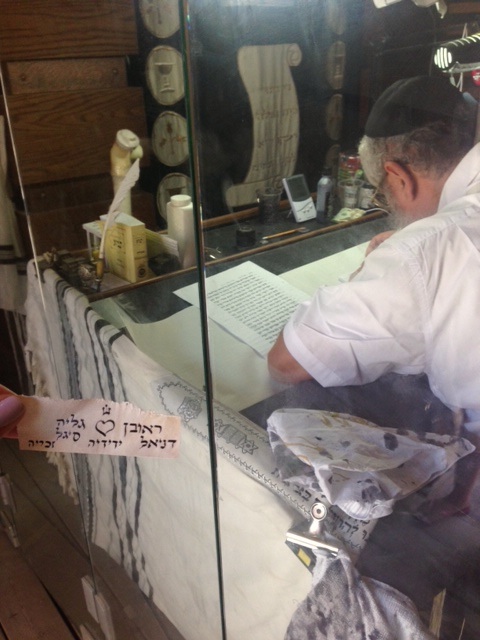
My fingers feel the softened, torn tickets for the cable car up Masada. We met a Torah scribe at the top, who sits amongst the ancient ruins in an air-conditioned cave behind a glass door, and scripts the Torah. With a white-feathered quill. On the finest parchment. He wrote our Hebrew names with that quill, on a scrap of that parchment, in beautifully formed letters and then blessed our family. I almost forgot to breathe.

Scribe

I’m sad it’s over… but so happy it happened. We love Israel, all of us, in ways and more than I could ever have imagined.

Not Cucumbers, but Onions

onions

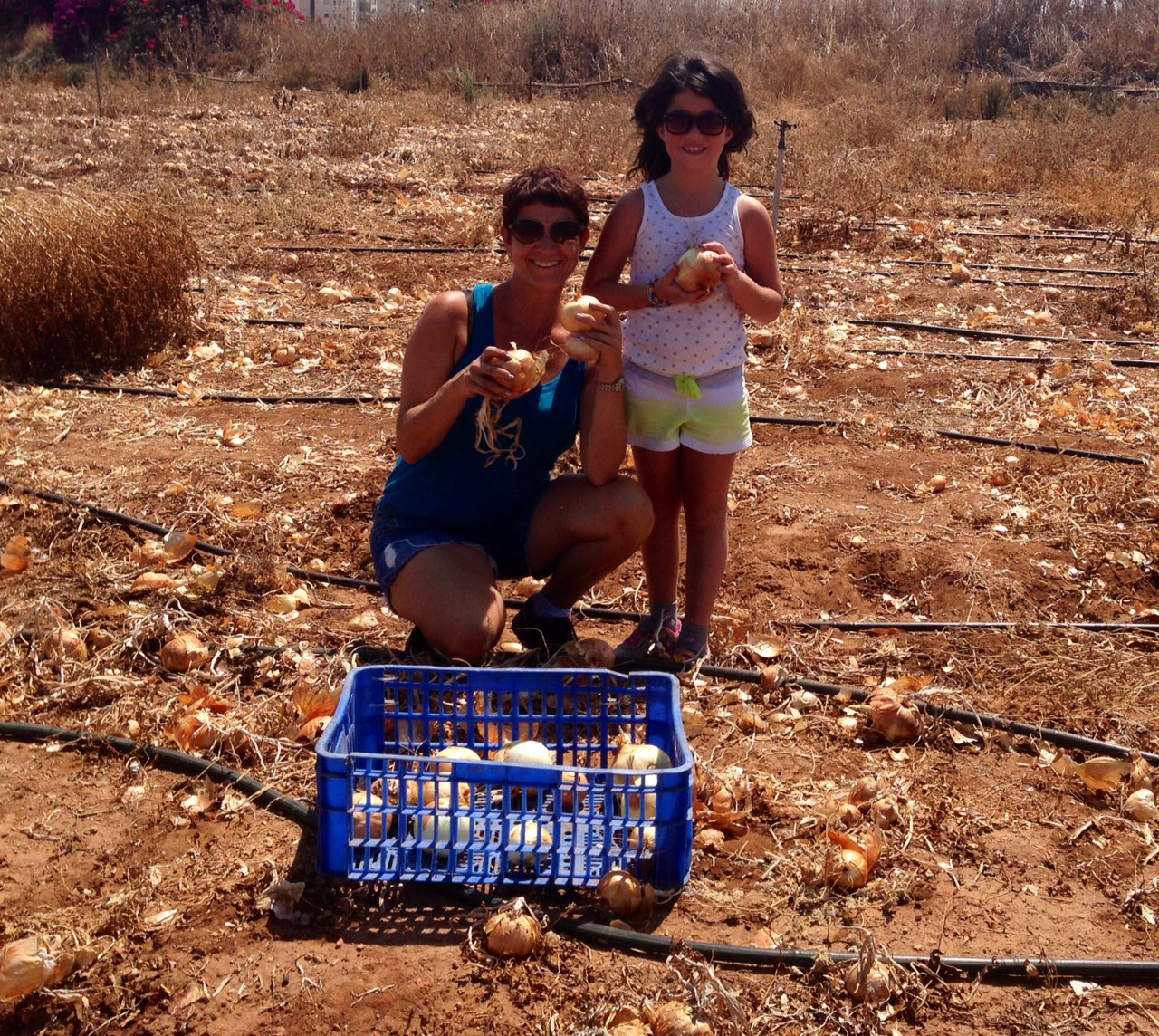
We made it! It was onions we picked today, not cucumbers, and it was as perfectly hot and dusty and meaningful as we imagined. One singing grampa, a determined mom and dad, one strong uncle and five eager and thirsty cousins picked 400kg of onions, which will feed 100 families no later than tomorrow at noon. Thank you Leket Israel for the experience, for your flexibility, and especially for the very important work you do to alleviate hunger in Israel. We’ll be back!

No Cucumbers Today

My favorite Hebrew word is melafefon. It means cucumber. An exotic-sounding, complicated, delicious mouthful of a word for such a plain and greenly simple vegetable. I try to say it as often as I can when I’m in Israel – my kids love cucumbers, so that helps. Where are the melafefonim? at the supermarket. Do you have melafefonim? at the restaurant. And today, we were supposed to pick melafefonim at the fields near Rehovot.

source: leket.org.il

source: leket.org.il

But there are no bomb shelters in open fields. No protected rooms, or walls to crouch against. The best you can do is lie down flat and cover your head with your hands. That way if the shrapnel falls it’ll hurt your hands and not your head.

Too risky. So we didn’t go.

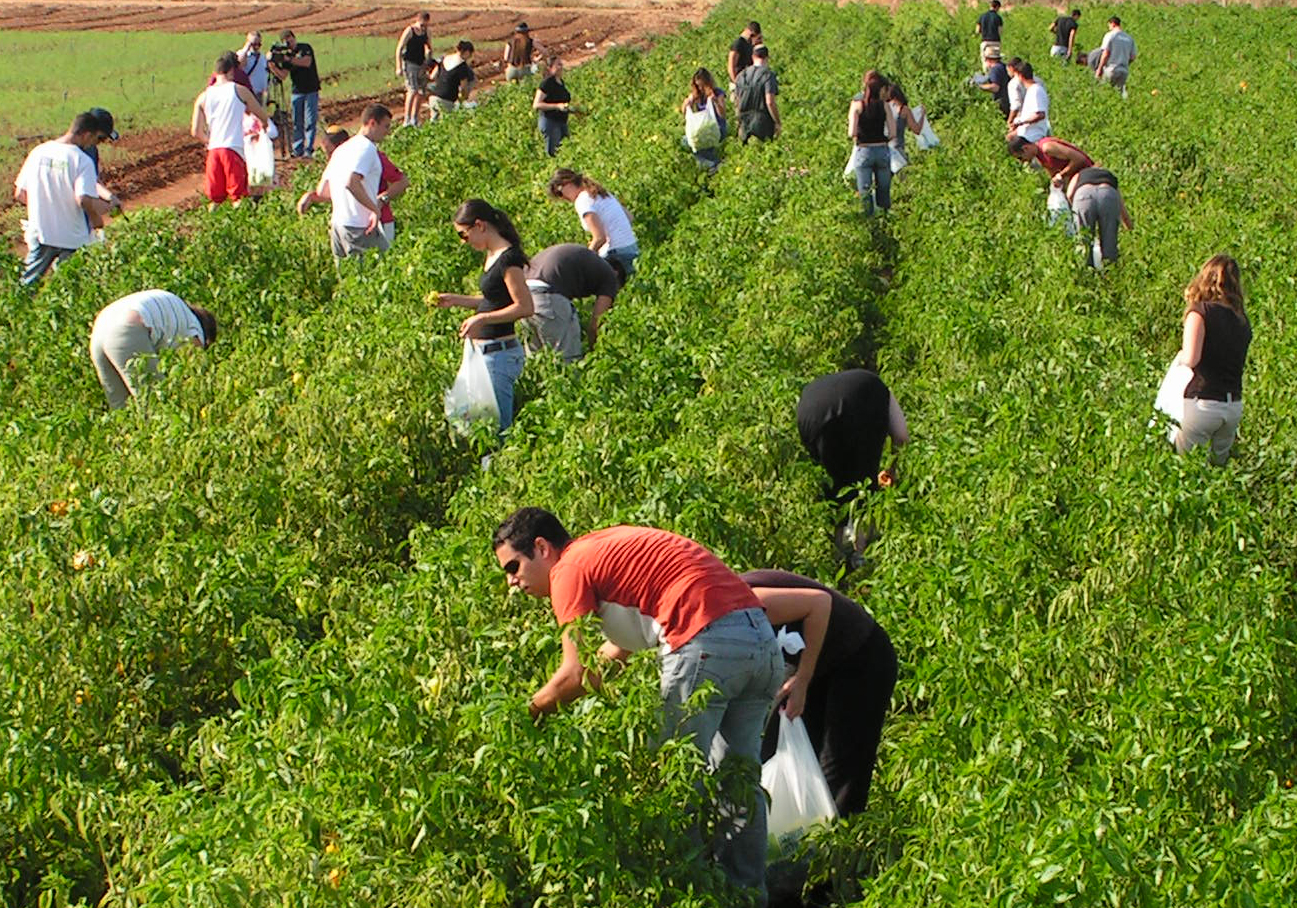
Actually, I’m not sure if it was cucumbers we were going to pick. Perhaps it was bright tomatoes. Or green peas. Or plumply purple eggplants. We were going to pick vegetables in the hot Israeli sun as part of my son’s bar mitzvah. To give back. To do a mitzvah. We wanted to be outside, together, kids and grown-ups, littles and bigs, and harvest x number of pounds of veggies to be distributed to families in need in Israel.

But I couldn’t do it.

And I’ve been doing it all: camel riding in the desert, kayaking on the Jordan, the markets in Jaffa and Jerusalem. Not knowing if the sirens would wail in Tel Aviv or further north. They are relentless in the south. Some mornings have found us in the bomb shelter in various states of dress (or undress), and some have been eerily quiet – or maybe we just don’t hear the sirens when we’re in the sea. A week has become 20 days and 43 fallen soldiers. Terrifying cries of anti-Semitism and the most blatant anti-Israel rhetoric I thought I’d never read or watch from countries I feel scared to call home.

I’ve seen the smoke trail from Iron Dome interceptions, heard the booms as rockets hit the ground, cried for the beautifully brave soldiers we’ve lost. I’ve dragged my children to the beach – where there are no shelters, and even when they’ve had enough sun and sand, because there are too many children stuck all day in bomb shelters in areas near Gaza, where the rockets fly too frequently and the risks are not just possible, they are likely.

I’ve learnt Hebrew words I didn’t even know existed: azakah (alert), mamad (protected room), Kipat Barzel (Iron Dome).

I’ve noticed a change – subtle but definite – in the very air around me. On the beach. In the restaurants. Walking outside. The usually noisy, argumentative, full-of-life-and-love Israelis are quiet, preoccupied. Their smiles are tense and their eyes are sad. But determined. They are resolute. Strong.

I’ve been hanging on to that strength. That resolve. So happy to be here – any time and with anyone, but especially now and with my children. I’ve been determined to show them the country I love, no matter what. Determined to celebrate my son’s bar mitzvah mostly the way we imagined. I’ve been hugged in an aura of love and appreciation and even slight bewilderment by Israeli family and friends who can’t believe we’re still here, but are so delighted we are. As if we’d be anywhere else.

I’ve been determined that nothing will stop us. Life continues. This is how it is here. We will celebrate, and be together, and pick cucumbers.

But I couldn’t do it.

I couldn’t ask 23 people to meet us in an open field, with no shelter nearby. I couldn’t take my own four children into a situation so obviously unsafe, where the best they could do if they heard a siren would be to lie on the earth with their hands on their heads. And pray.

I couldn’t do it, and I felt worn down. Beaten. That tenacious determination slowly draining ounce by painful ounce out of my fingertips, my mouth, my heart as I canceled our field trip with a sigh of resignation, deep disappointment, sadness. This is how it is.

“What are we doing today, Mom?” they chirped in anticipation. Big eyes, bright voices, adventurous spirits.

I lifted my chin. Took a breath. Inflated my heart.

We did not go to the fields today – but I am determined, before we return to California in August, to pick melafefonim. With my children. In Israel.

Ways to Help in Israel

Operation Protective Edge enters its 16th day today. Over two weeks of sirens and rockets and cease-fires that weren’t. Twenty-nine Israeli soldiers have been killed, and one is MIA. Children in the southern cities of Israel hear the relentless wail of sirens instead of the wind in their hair. They sit against the cold, hard, protective wall of the bomb shelter instead of lying in the green grass and imagining shapes in the clouds.

We read and watch the war and anti-Semitism unfold throughout the world, and feel blindsided, helpless, despairing. Both outside of Israel and in.

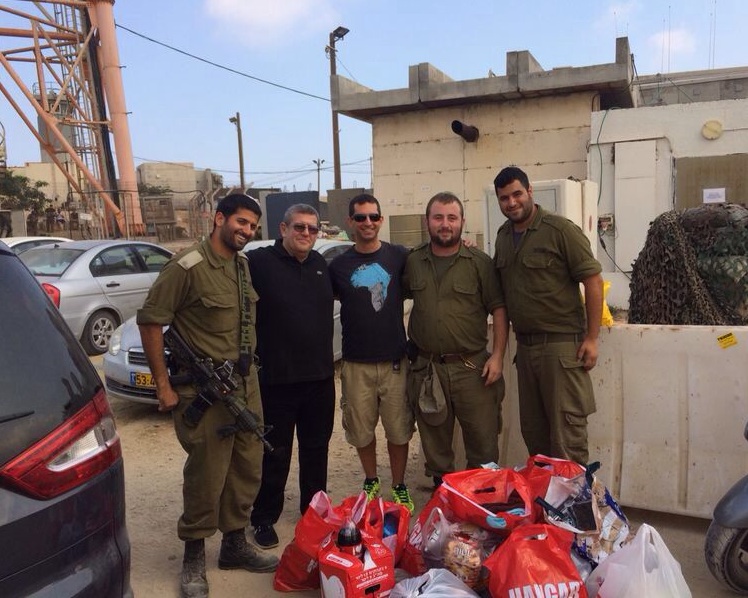
Socks, underwear and deodorant are at the top of the list for the soldiers on the front lines. Pizza. Support for reserves. And lone soldiers. Kids in the south. Prayers. Here are 21 Ways to Help Israel, all very concrete and impactful. 

And I have a close friend here who is purchasing and collecting donations of underwear, deodorant, toothpaste for the soldiers and delivering it directly to the bases. If you’d like to contribute (any currency, any amount) email, comment, or tweet me. And pray for peace.

soldiers